


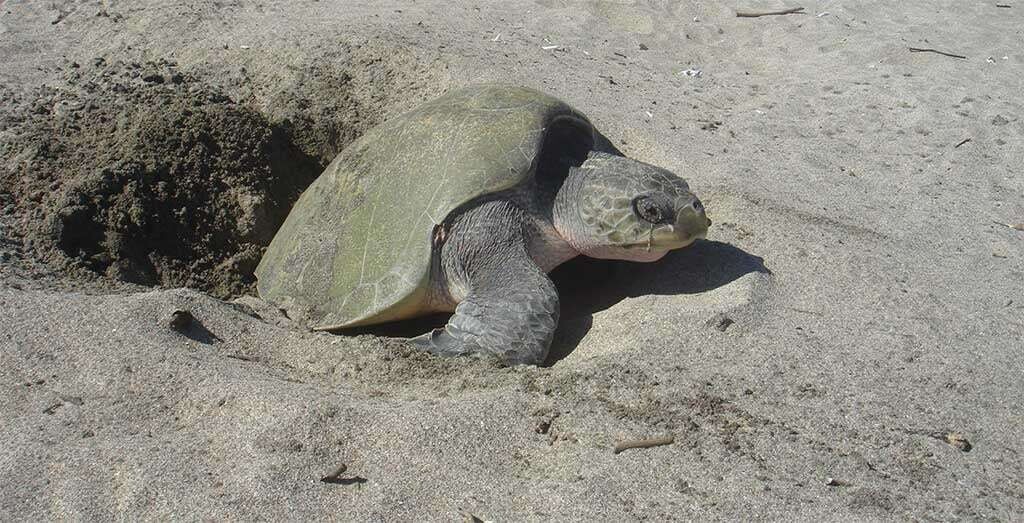
A total of 845 olive ridley turtle hatchlings, a species endangered, were released into the Pacific Ocean from two wildlife refuges in Nicaragua. The Ministry of the Environment and Natural Resources (Marena) stated in a declaration that the turtles were released from the 'La Flor and Río Escalante Chacocente' refuges, in the municipalities of San Juan del Sur and Santa Teresa, where they were hatched in nurseries, into the waters of the Pacific Ocean. The release of these 845 hatchlings, part of the 'Together we conserve our sea turtles' campaign, involves moving them from the refuges to the beach where they are set free on the sand just a few meters from the sea. The Nicaraguan Ministry of Environment indicated that this turtle release took place within the framework of the Summer Plan 2026 and as part of efforts for marine fauna conservation. The ministry highlighted that its conservation area rangers, along with Nicaraguan Army personnel, were in charge of releasing the hatchlings and are the same ones responsible for protecting the turtle arribadas. The turtle nesting activity also included the participation of 291 national and foreign tourists, and young environmentalists, according to the information. The 'Río Escalante Chacocente and La Flor' wildlife refuges, both on the Pacific, annually host thousands of turtles during the 'arribada season', from July to January. They are two of the seven places in the world where these turtle species arrive, among other endangered animals, according to the ministry. Either of these beaches can receive up to 4,000 turtles in a single night, according to Marena's Biodiversity Directorate calculations, which expects that 120,000 turtles will arrive and 1.8 million hatchlings will emerge on the Pacific coast this season. After living about 15 years in the ocean, turtles return to nest on the same beach where they were born, probably on a new or full moon, which is why massive arribadas can be predicted, according to authorities, who issue a possible calendar of these phenomena each year. The commercialization of olive ridley turtle eggs is prohibited in Nicaragua due to the species being endangered. However, EFE verified that some markets, establishments, and street vendors evade this measure.